
Bimaristan
South Africa

Reviving the Golden Age Tradition of Healing in South Africa
What are Bimaristans
Bimaristans were one of the earliest hospitals in the Islamic world. The word comes from the Persian bimar meaning “one in need of healing,” and stan meaning “place” - literally, a place for healing. Emerging in the eighth century and reaching remarkable development during the Abbasid era, Bimaristans became sophisticated centres of organised health care.
They were not only places of healing. They functioned as teaching spaces, integrating clinical practice, structured professional training, and ethical accountability within a unified model of care. Clinicians were examined and certified, departments were organised by specialisation, and libraries supported research and learning. Care was structured, professional and accountable.
At the same time, Bimaristans were grounded in compassion and public service. Many operated as charitable endowments, offering care regardless of wealth, background or belief. They reflected a model of healthcare rooted in dignity, inclusion and responsibility towards the wider community and humanity.
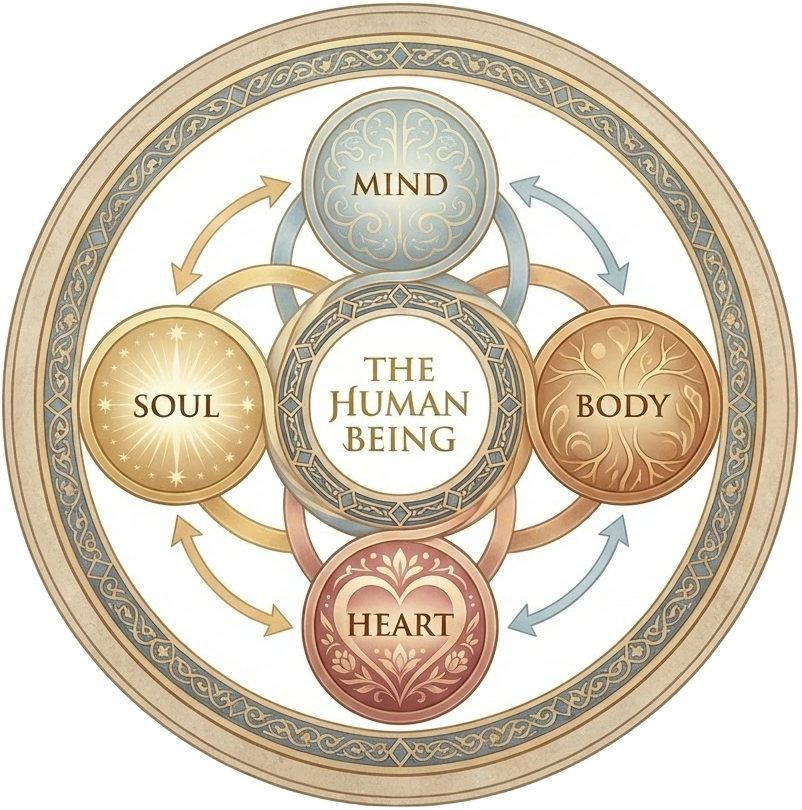
Beyond being sophisticated centers of excellence, Bimaristans recognised the human being as a whole. Healing was understood as the integration of mind, body, heart and soul. The mind was supported through psychological care, the body through medical treatment, the heart through emotional and relational support, and the soul through spiritual insight and meaning, informed by the wisdom of Ilm al Nafs, the Islamic science of the self.
A Bimaristan was therefore more than a hospital. It was a holistic system of care where professionalism and compassion flowed together.
Bimaristan in South Africa
While the classical Bimaristans were established in cities like Baghdad, Damascus and Cairo, the spirit of holistic and faith informed care travelled with Muslim scholars, spiritual leaders and communities across the world.
From the seventeenth century onward, Islamic traditions of healing and community service took root in South Africa. Exiled scholars as Shaikh Yusuf of Macassar brought with them spiritual leadership, guidance and traditions of care that emphasised dignity, moral formation and communal responsibility. In the late nineteenth century, figures like Hazrat Soofie Sahib Rahmatullah in Durban established centres that combined spiritual leadership, refuge, and holistic healthcare for vulnerable people.
The Bimaristans in South Africa establised by these exiled scholars were contextual expressions of a deeper tradition, shaped by the diverse community. Care was understood as relational, communal and rooted in shared humanity.
In this way, the Bimaristans did not simply remain a historical memory. Its ethos of integrated care and social responsibility became woven into the South African experience.
Fountain For Humanity Inspired by Bimaristans
Fountain For Humanity draws inspiration from the Bimaristans of the Golden Age of Islam which travelled to South Africa, as a living model of integrated and dignified care.
Fountain For Humanity is reviving the Bimaristans' principles within a contemporary professional framework. The services are grounded in ancient wisdom, ethical psychology and therapeutic counselling, aligned with modern standards of care, while remaining informed by faith, compassion and culturally sensitive approaches.
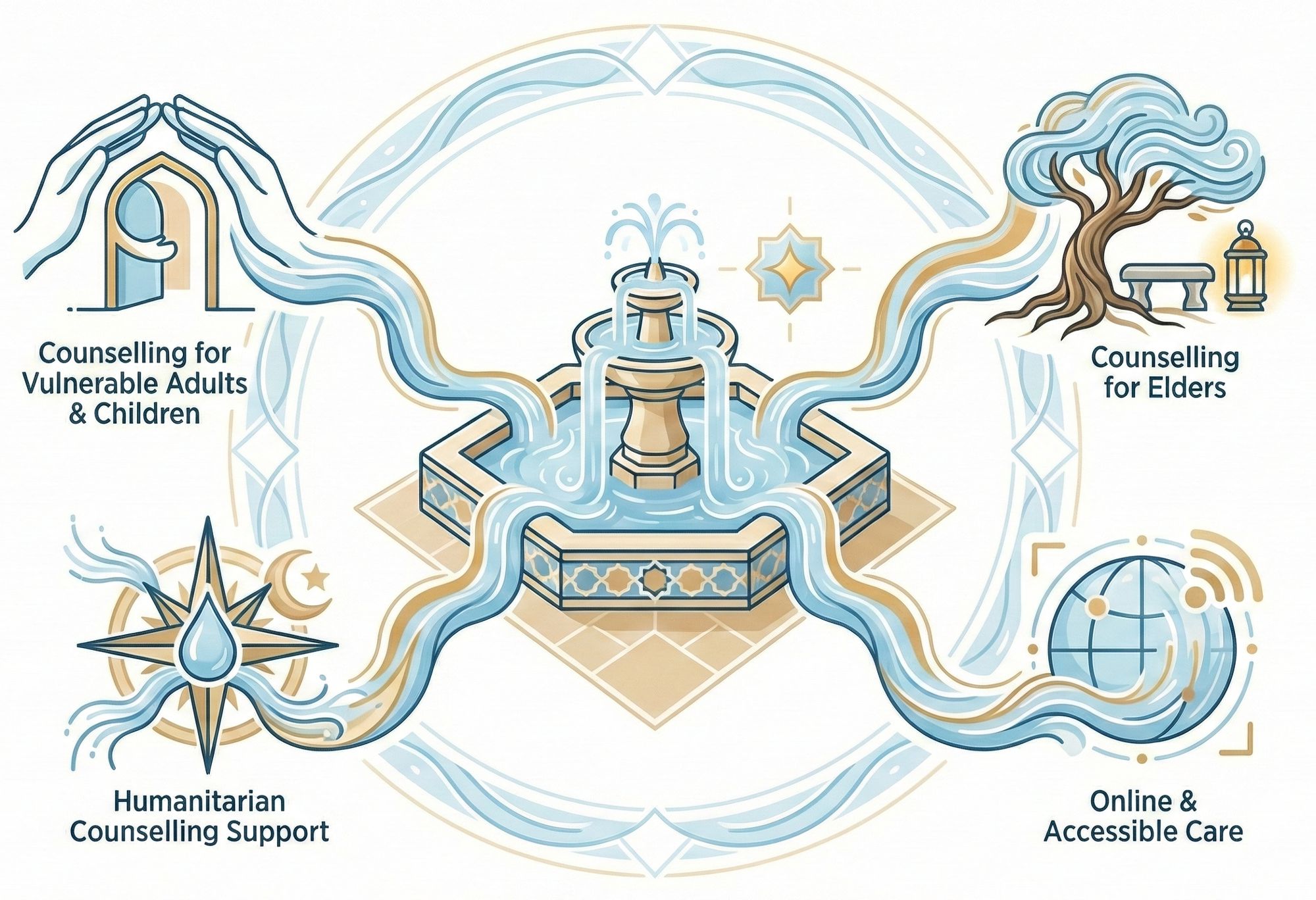
The fountain in the Fountain For Humanity logo symbolises life, purification, spiritual growth and compassion in motion. As the courtyards of the Bimaristans welcomed humanity, the Fountain For Humanity invites the commnity and humanity to an inclusive, confidential and accessible online therapeutic counselling space across South Africa.
The Wellkeepers' services are grounded in South African realities, shaped by diversity, unity, compassion, and the enduring wisdom of Ilm al Nafs. Bimaristans are thus a revived approach for holistic healing in South Africa.
Bimaristans' Approach in Practice Through Our Services

Vulnerable Adults & Children
Therapeutic counselling and emotional support for women and children facing trauma, loss, abuse or ongoing life challenges, offered in a safe and supportive online space.

Counselling for Elderly
Online counselling for elders experiencing grief, loneliness, emotional strain or major life transitions, provided with dignity, patience and respect.

Humanitarian Counselling
Emotional and psychological support during times of crisis or disaster, delivered in collaboration with humanitarian organisations to support affected individuals and communities.
Care for the Carer
Confidential counselling for counsellors, aid workers and care practitioners experiencing burnout, secondary trauma or emotional strain, helping restore resilience and sustain long term service.